Marnaton: How a Swim Between Friends Became Spain's Open-Water Circuit
Full disclosure before anything else: I sit on Marnaton's board. I'm writing about it here because it's the circuit I know best and the one I'd point any traveling swimmer toward first, but you should weigh what follows knowing I'm not a neutral party.
Where Marnaton came from
The roots trace back to the 1992 Barcelona Olympic Games, where Miguel Rahola and Mirentxu Vignau both worked as part of the Games' organization. The experience left them wanting to build something of their own one day, something that put sport and the sea in the same place.
The idea sat for years while the swimming carried on. Rahola and Alex Miquel swam the stretch of water off Cap de Creus that would later become the Cadaqués course, in August, across several summers from 2001 onward.
What turned it into a decision was Gibraltar. Rahola crossed the Strait in October 2006 and came back convinced.
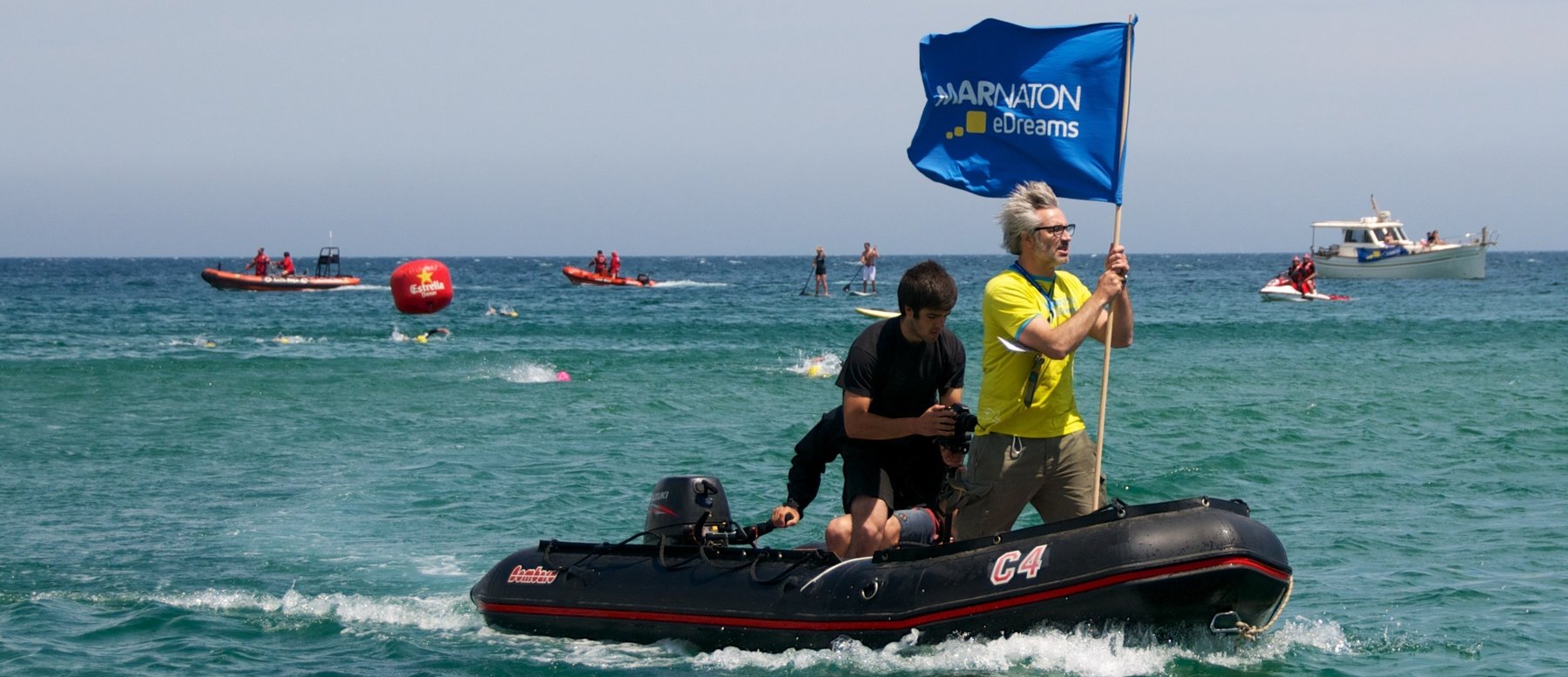
Photo: Marnaton
The decision itself came over a drink with friends. Someone asked what he would be doing if he were not running Vileda's business in Spain and Portugal, where he had spent twenty-four years. He knew the answer before the question finished: he would spend his life making open-water swimming popular.
Gibraltar was not a solo expedition. Both families travelled to Tarifa for it — Miguel Rahola and Irene Dalmau, Alex Miquel and Mirentxu Vignau — and went again the following year for the crossing from Lanzarote to Fuerteventura.
That shaped what the circuit became. It was built by people who swim together rather than by a soloist chasing a record, and the events took the same shape: several distances in the same water on the same day, so swimmers of different speeds and ambitions can share a start line and all finish.
Where the name comes from
On 31 May 2007, seven months after Gibraltar, he wrote three Spanish words on a blank sheet of paper — MAR (sea), NATACIÓN (swimming) and MARATÓN (marathon) — and watched them collapse into a single word: MARNATON. He registered it as a trademark almost immediately, before there was any event to attach it to.
Who is behind it
Miguel Rahola co-founded Marnaton and is the visionary behind it. The Gibraltar crossing, the blank sheet of paper and the conviction that open-water swimming could become something ordinary people did were all his. Alex Miquel co-founded it too, and swam the Cap de Creus route with him for years before there was an event to put on it; he designs the courses, reading weather and currents to decide where a swim should actually go. Mirentxu Vignau co-founded Marnaton and is its Director of Operations. Irene Dalmau has been part of it from the beginning and coordinates much of the logistics on the ground. David Campá is the CEO today.
Nearly two decades in, the people who started Marnaton are still the ones setting the buoys, alongside a team that has been there for years.
What Spanish open-water swimming looked like before
It is worth understanding what they were building against. Spain had open-water races, but they were small and local, a kilometre or two between two town beaches, drawing people who already lived there. Nobody was staging a serious 6- or 7-kilometre crossing around an exposed headland and expecting strangers to travel for it. When they announced the first Cadaqués swim, a fair number of people thought they were mad to put a mass start in water that wild and that windy.
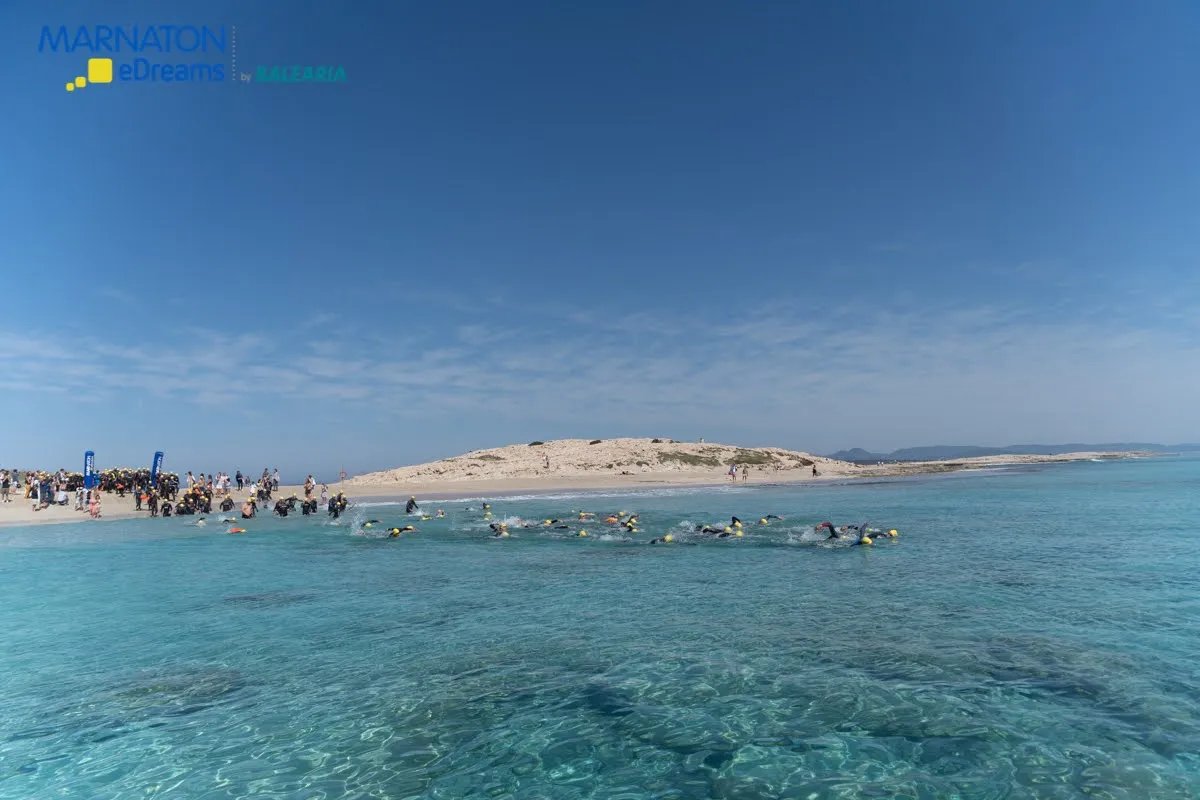
Photo: Marnaton
The first edition ran in September 2008, a 6.5 km crossing from Cap de Creus into Cadaqués. Two hundred swimmers registered. The sea did not cooperate — rough water, heavy swell — and 190 of them finished anyway.
Enough others loved it that the doubt stopped mattering. Within two or three years, rival organizers had entered the market, which Rahola has described as the real proof the idea was never crazy. Today that stretch of coast has an open-water event most summer weekends.
What it became
The founding goal was modest and has never really changed: get more people comfortable swimming in open water, and give them enough confidence and safety to actually enjoy it. What changed was the scale.
eDreams came on as title sponsor in 2010. That was my decision, and an easy one to make. I was an avid open-water swimmer myself, and I loved what they were building. That backing paid for the unglamorous things that make an open-water event good. Properly marked courses, safety boats, medical support, and shorter distances so newcomers had somewhere to start. Cadaqués grew from those 200 original swimmers to more than 1,800 in recent editions. Across the full circuit, recent seasons have drawn more than 5,500 registrations.
They built a club to teach sea swimming
In 2009 they founded a club of their own. Five people, David Campá coaching, in a Barcelona pool. The reasoning was practical: they wanted to swim better, and every class on offer anywhere was written for the pool rather than the sea. What grew around it was a community of swimmers, and that community is why Marnaton came through the pandemic: when nobody could race, the training moved online and the thing held together.
The other decision that changed Marnaton was giving up the idea it started with. The original concept was a marathon of the sea. One long, serious crossing, with everything else secondary. What the circuit became instead was a menu, and the numbers explain why.
The distance menu is not a formality, and the numbers show it. Across the circuit, the short and medium swims together account for roughly seven entries in ten. The long distance takes about a quarter. The XL, the one that sounds like the real Marnaton to an outsider, is barely two percent of the field. The circuit grew because it kept making room for the people who were never going to swim ten kilometres, and those people turned out to be almost everybody.
The circuit itself was not designed on a map. It started with Cadaqués, then tried places and kept the ones that worked. Sitges and Ibiza were both experiments before they became fixtures. The six stops that make up the season now are the survivors of that sorting.
Women now make up 40% of the field, up from a small minority in the early years, and most of that growth sits in the medium and short swims. At the other end, swimmers past 75 are lobbying for an over-80 category, having already argued the over-70 into existence.
Some of the additions matter as much as the growth. Marnaton Kids puts five- to thirteen-year-olds in the water at the major stops. OWGis, launched by ten women at Cadaqués, works to close the gender gap in the sport. And the Cadaqués race has run fundraising editions for cancer research alongside the competition.
What I'd tell a swimmer considering it: this is not a circuit built around elite times. The distance menu at every stop runs from something you could do on a whim to something you'd need to train for, and the whole thing is structured so a family can come along and make a weekend of it. That's the actual proposition. Six extraordinary coastlines, six weekends, and swims that are worth the trip on their own terms even if you finish mid-pack.
The six swims
Marnaton keeps picking the kind of coastline this guide was built to find, which means most of these stops already had hotels on our list long before the idea for this piece came up. So alongside each swim, here's where we'd stay. Not necessarily the closest bed to the start line, but the places worth building the weekend around.
Distances shift a little year to year, so treat these as the shape of each event rather than a fixed promise. The current calendar and entries are always at marnaton.com.
Formentera — early May
The season opener, and the one with the clearest water of the six. Formentera's shallows run turquoise over white sand and seagrass meadows in a way that makes the 2 km feel like snorkeling with a destination. Recent editions have offered roughly 2, 4 and 8 km. It's also the coldest of the season by water temperature, being the earliest.
The race is based around Es Pujols in the north. Both hotels below sit on the island's southern shore, a short drive rather than a walk. On an island this size that is a non-issue, and the swimming in front of them is superb in its own right.
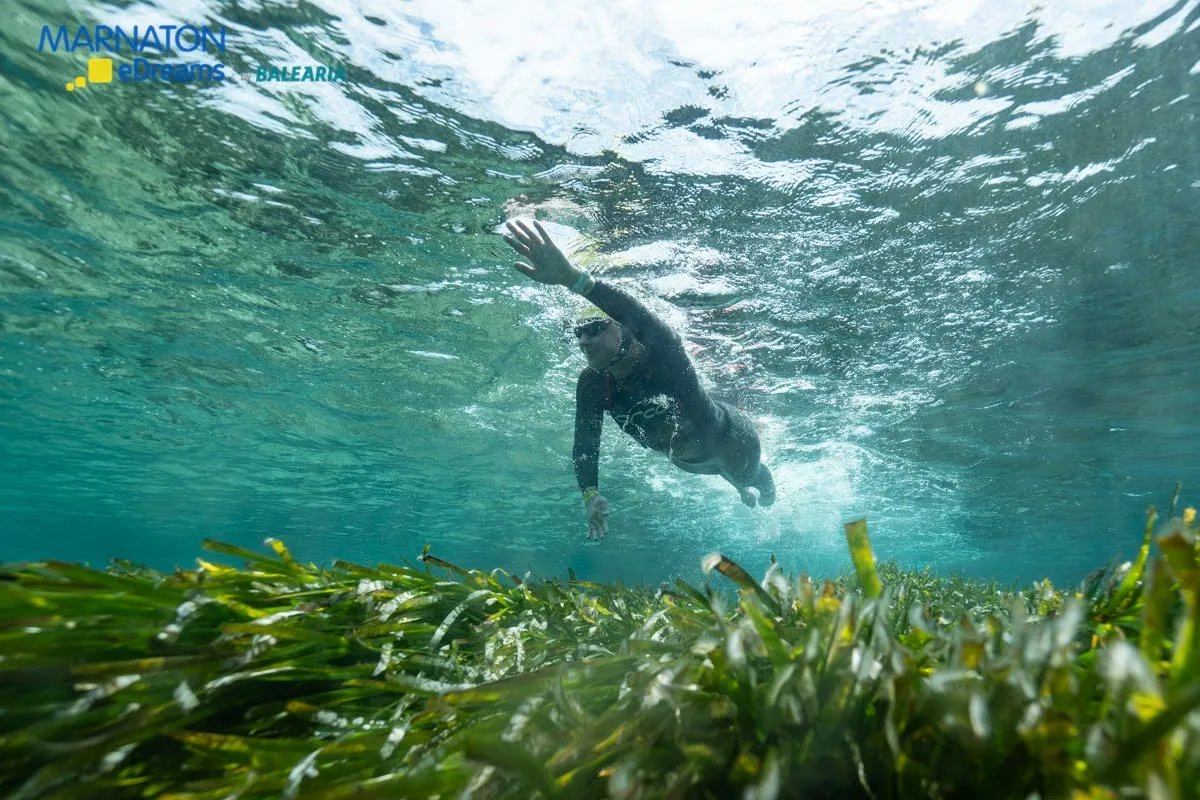
Photo: Marnaton
Dunas de Formentera
Boardwalks through the dunes lead straight to Formentera's longest beach.
See the full listing →Teranka Formentera
A pine-shaded boutique hideaway close to Formentera's Playa Migjorn.
See the full listing →Sitges — mid-May
The most urban swim on the circuit and the easiest to reach. Sitges is forty minutes from Barcelona, which makes this the stop to pick if you're combining the swim with a city trip or bringing people who don't swim. Recent editions have run around 2 and 4.5 km along the town's beach chain. The promenade means spectators can actually watch, which is rarer than it sounds in open water.
ME Sitges Terramar
The quiet end of Sitges' beach promenade, positioned for an uninterrupted swim.
See the full listing →Casa Vilella
A long, connected chain of sandy town beaches built for a proper open swim.
See the full listing →Casa METT Sitges
A new boutique address in five restored villas, minutes from the sandy beach.
See the full listing →Begur — early June
Begur is the cove-hopping capital of the Costa Brava and the stop I'd send a first-timer to, because the coastline itself does the work. Recent editions have offered roughly 1.5, 3 and 7 km through water that runs clear over rock and posidonia. The Camí de Ronda threads the whole shoreline, so the days either side of the race are as good as the race.
Hotel Cap Sa Sal
A secret tunnel and elevator connect this 1960s clifftop hotel to its own private cala.
See the full listing →Hotel Aigua Blava
A private cove with three more just a short stroll away, on undeveloped coast.
See the full listing →Hostal Sa Tuna
The path leads to a cove you can only reach by swimming, walking, or paddling.
See the full listing →Hostal Ses Negres
Just steps from Begur's largest sandy beach, with views over the protected Medes Islands.
See the full listing →Hostal Sa Rascassa
A launch point built for swimming, with trails on to two neighboring coves.
See the full listing →Sant Feliu de Guíxols — late June
The one for people chasing distance. Sant Feliu carries the longest menu on the circuit, recently topping out with an XL of around 10.5 km alongside roughly 1.5, 3.5 and 6 km options. Late June also means the warmest water of the first half of the season.
We don't currently list a hotel in Sant Feliu itself. S'Agaró is the next bay over, and Platja d'Aro a short drive up the coast. If you know a place in Sant Feliu that clears the four rules, tell us about it. We'd like to close that gap.
Hostal de la Gavina
On a peninsula where the rocks split the bay for swimming and for snorkeling.
See the full listing →Sallés Hotel & Spa Cala del Pi
Direct access to the named rocky cove of Cala del Pi.
See the full listing →Hotel Costa Brava
Perched on the rocks between two beaches on the coastal path — swim either way.
See the full listing →Cadaqués — September
The original, and still the heart of the whole thing. The Cap de Creus crossing is the swim the founders were doing before any of this was an event, and it remains the most serious water on the circuit: exposed, current-swept, occasionally hammered by the tramontana. Recent editions have offered roughly 2.5, 4.5 and 6.5 km. September water is the warmest of the year here, which takes some of the edge off.
Cadaqués is also where the other half of the Marnaton idea shows itself most clearly. The organization calls it Swim&Fun, and it means what it sounds like: get the safety on the water right, then give everyone a reason to stay. The party afterwards runs on live music and a DJ until about four in the morning.
If you only do one Marnaton, do this one. It is also the hardest weekend of the six to find a bed for, so book early.
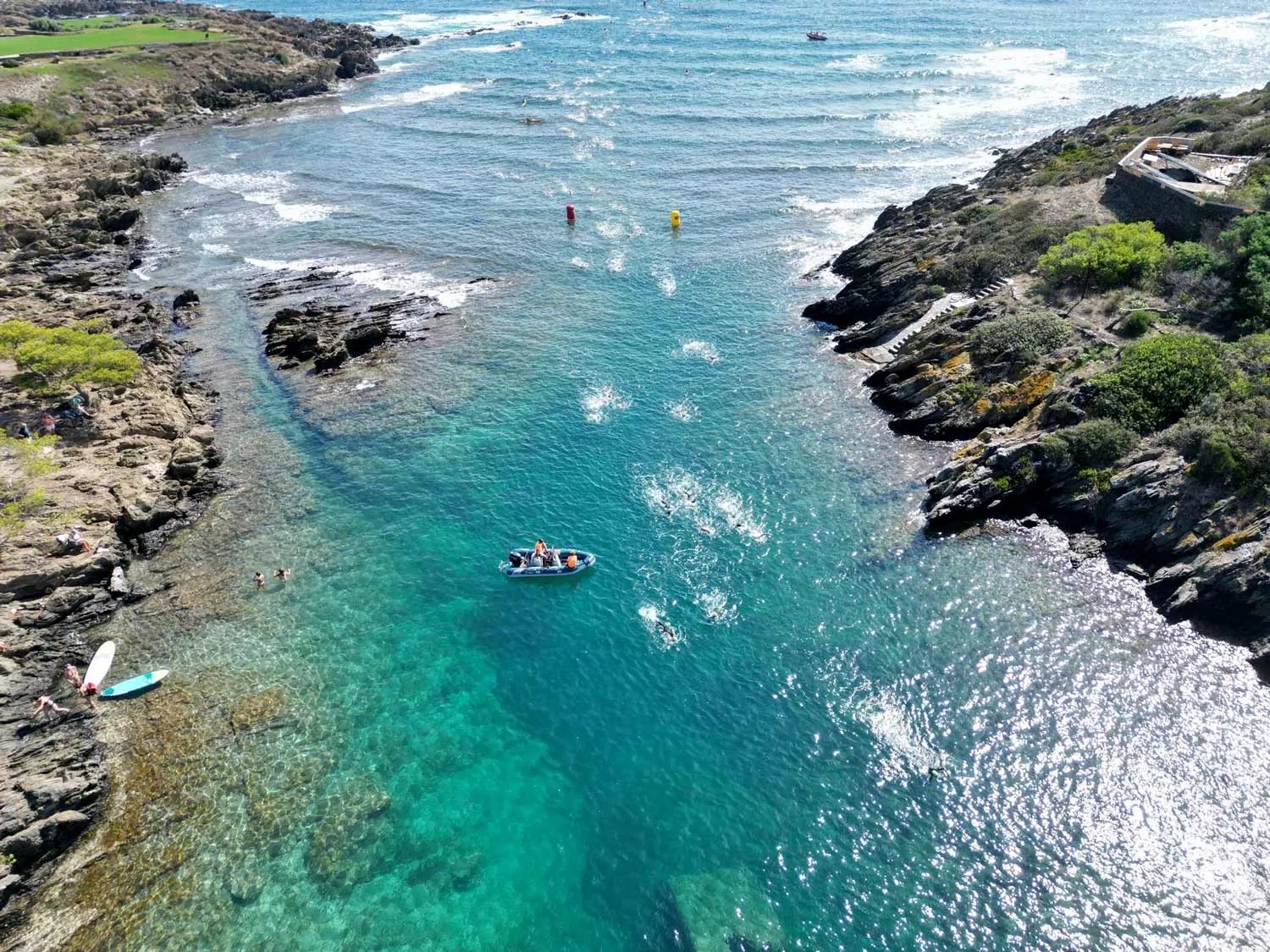
Photo: Marnaton
Hotel Llané Petit
Step straight off the terrace onto a quiet pebble cove inside a protected natural park.
See the full listing →Hotel Playasol
Thirty seconds from door to water — built for swimming, not sunbathing.
See the full listing →Villa Salvador
Wake up between two beaches, with a handful of quiet coves a few minutes' walk away.
See the full listing →Ibiza — October
The closer, on Ibiza's wild north coast rather than the island's busy south. A different Ibiza than most visitors ever see. Recent editions have offered roughly 2, 4 and 8 km, finishing on the beach at Port de Sant Miquel. October means the warmest water of the entire season, since the Mediterranean holds its summer heat well past summer.
Cala San Miguel Ibiza Resort
A private walkway leads straight down to a quiet, adults-only bay on Ibiza's north coast.
See the full listing →Why we list these
Every hotel above is on this guide for the same reason every other hotel here is: it passed the four rules — direct access or under five minutes on foot, a real unobstructed swim route, water worth swimming in, and a place genuinely worth staying at. None of them is here because of any connection to Marnaton, and Marnaton has no say in what appears on this site.
The full list, organized by country and region, is here.