Not all beachfront is made for swimmers.
The short answer: a hotel is good for open-water swimming if you can be in the water within five minutes of the door, swim in a straight line once you are there, in water you actually want to be in, at a hotel you would happily return to even if you never got wet. Those four things are the rules we use. Everything below is how we arrived at them, and what each one rules out.
Plenty of hotels sit on the water and are no use at all if what you want is a swim. Every so often you get both, a great hotel and a great swim, and for us that is what makes a trip. Rather than keep relying on luck, we started keeping notes on which hotels actually work for open-water swimming. The notes became a list, and the list needed rules.
There are four. None of them was designed in advance. They are simply what the good places had in common. Many of the hotels on our list are there because a swimmer told us about them rather than because we found them ourselves.
1. Direct access to open water, or under five minutes on foot
Hotels describe themselves as beachfront and mean something else entirely: a shuttle, a road crossing, fifteen minutes on foot with your towel. We stopped believing the word and started measuring the walk.
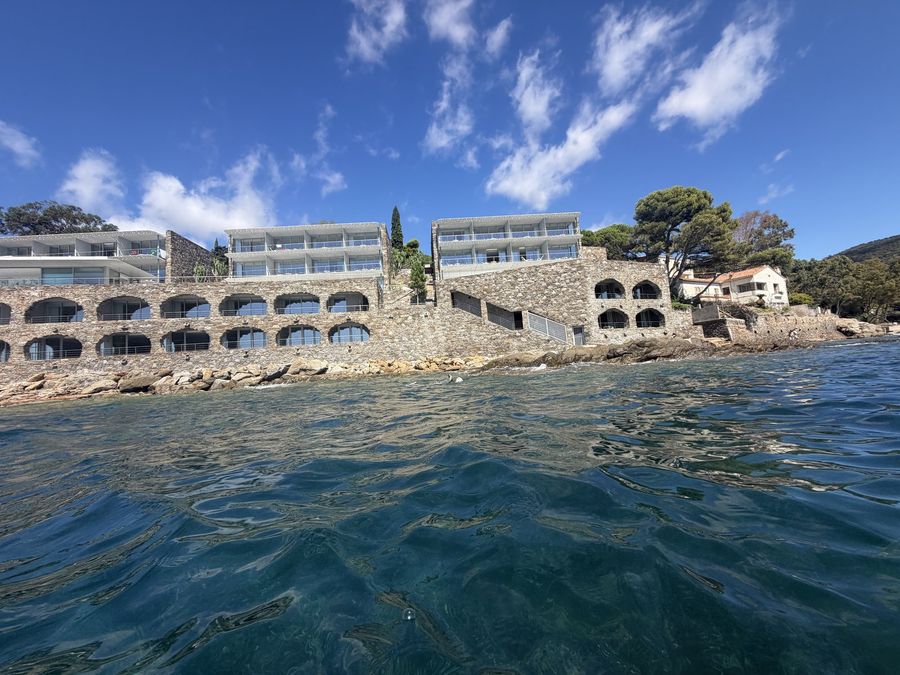
Five minutes is the outer limit, not the target. Most hotels on our list are genuinely direct, and where they are not, we say so. One of ours has a path winding down a cliff face that guests describe as a proper hike rather than a stroll. It passes, but a swimmer deserves to know before they book.
The reason the rule is about time rather than distance is that distance lies. A hotel a hundred metres from the sea with a dual carriageway in between is further away than one four hundred metres along a footpath.
2. A real, unobstructed swim route
Then the opposite problem. You can be right on the water and have nowhere to swim.
There is a hotel on Cap d'Antibes that we loved staying at. It sits directly on a beach. It also sits between two marinas, and the swimmable area in front of it is small. We had memorable swims on that cape, just not from there.
Access is not the same as a swim. This rule is about what happens once you are in: whether you can put your head down and go, or whether you are turning round every forty metres. Marinas, breakwaters, boat channels and roped-off bathing areas all end a swim before it starts.
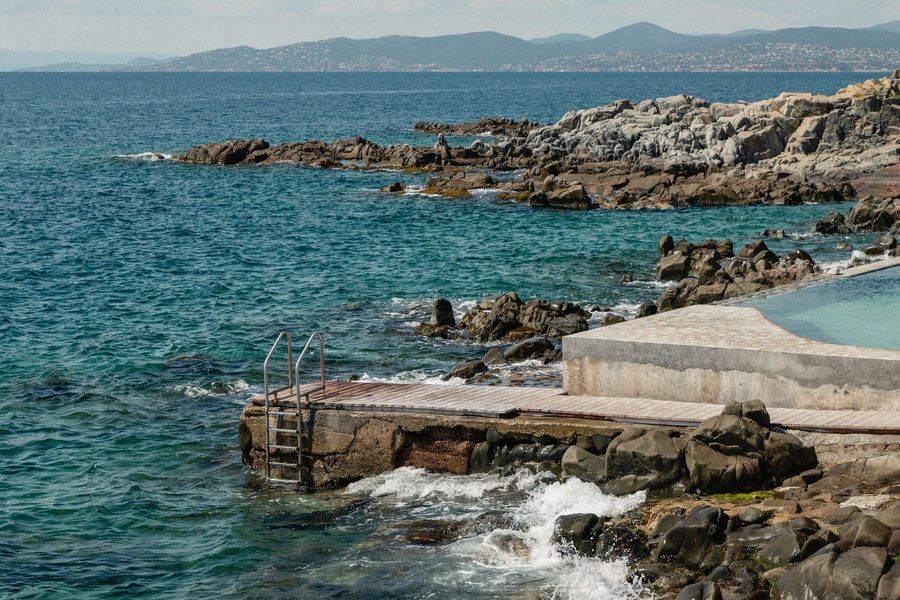
The best listings on our guide have somewhere to swim to. An island, a headland, the next cove along. Almost every time, we learned that from someone who had swum it.
3. Water worth swimming in
This one took us longest to get right.
We first wrote it as water quality and clarity, and then realised we had written a rule that excluded most of the water we love. Nobody swims San Francisco's Aquatic Park for the visibility.
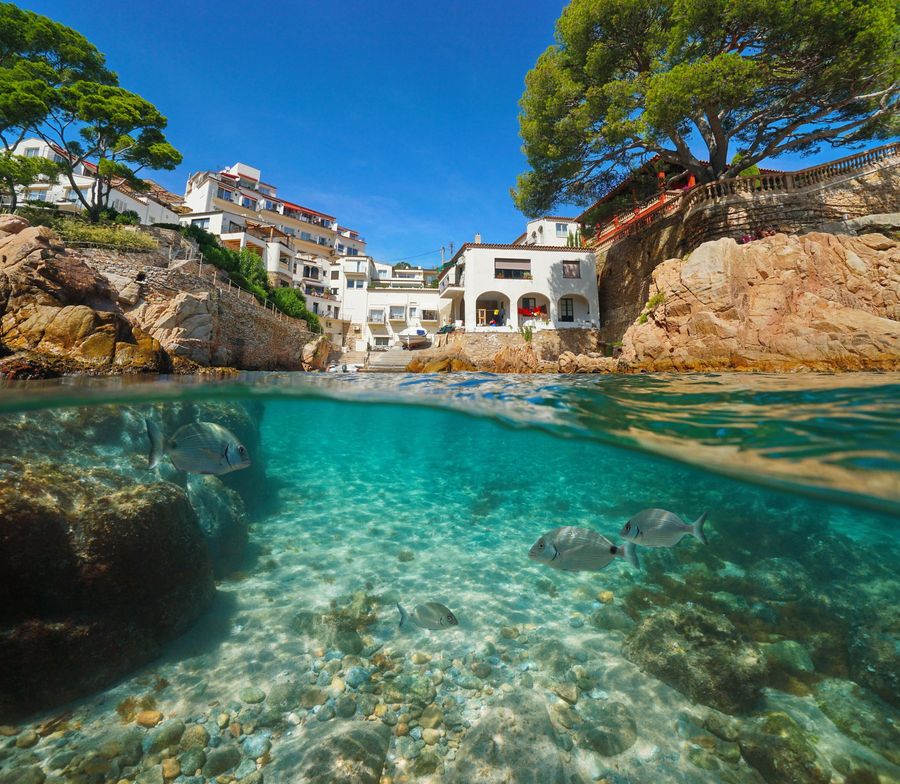
Sometimes worth swimming in means clarity, and you can see the bottom ten metres down. Sometimes it means the opposite: cold, dark, and the kind of water people get addicted to. What it never means is water you would rather not be in.
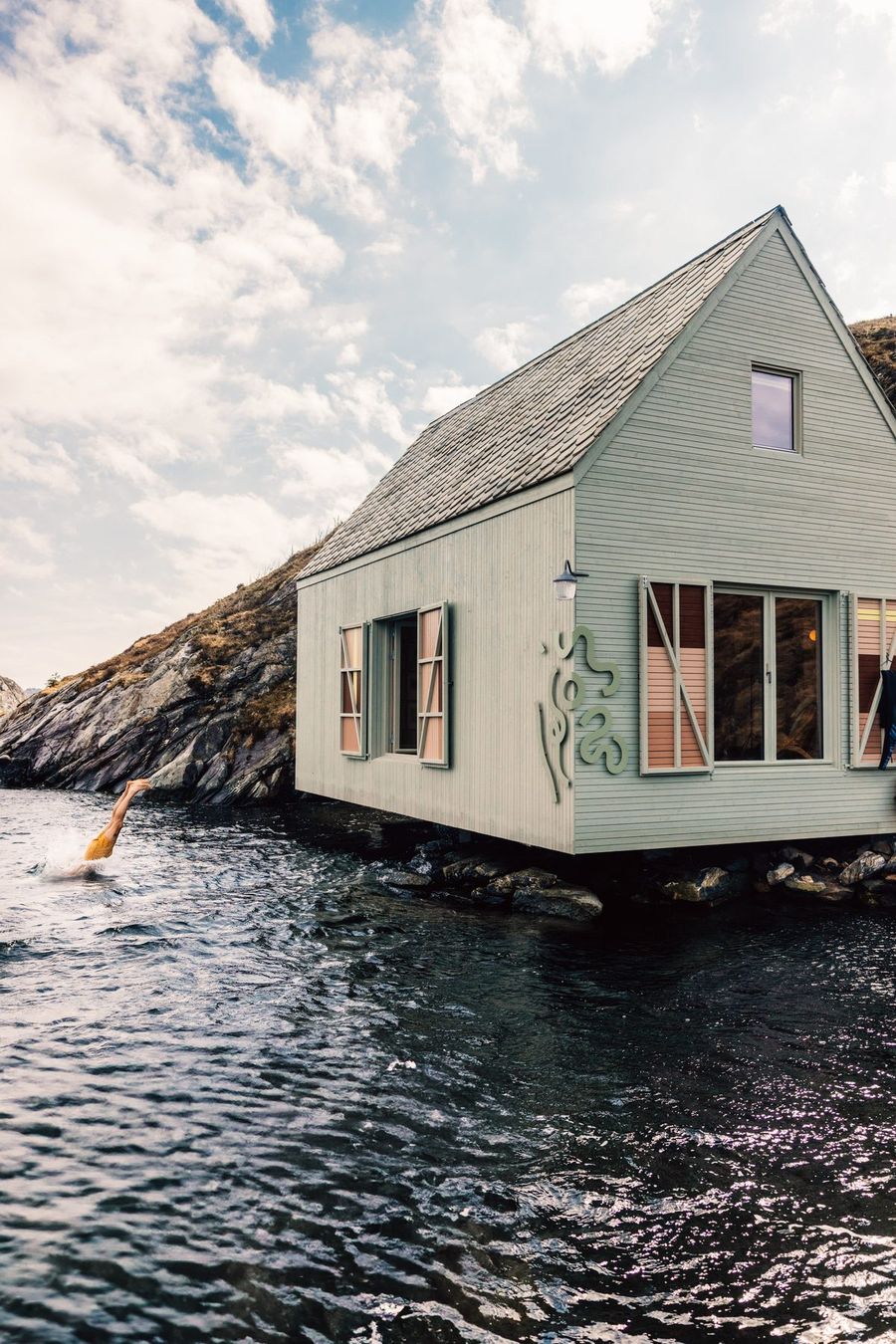
Clarity is one answer to this question. It is not the question. Plenty of the best open-water swimming in the world happens in water you cannot see through.
4. A hotel worth staying at, water aside
This is the rule that keeps the list honest, and it is the one people forget.
There are places with superb swimming that we would not go back to. If the only reason to be there is the water, it is not a hotel recommendation, it is a beach recommendation. A swimmer can find the beach without us.
Worth staying at does not mean luxurious. Some of our listings are small, plain and inexpensive. It means somewhere you would choose to spend a few days if the sea froze over.
How we apply them
One of us judges the access, the route and the water. The other judges the stay. Both of us swim everything we list, and a hotel goes on only when we both say yes.
The list is binary. No stars, no scores, no ranking. A hotel is on it or it is not, and if it is on it, it cleared all four. That means leaving off places we like, which is uncomfortable and is also the point. A list that includes everything is not a list.
The fifth thing, which is not a rule
Photographs.
Hotel photography exists to sell rooms. You get the suite, the breakfast, the pool at dusk, and the sea as a blue strip behind somebody's shoulder. It tells a swimmer nothing.
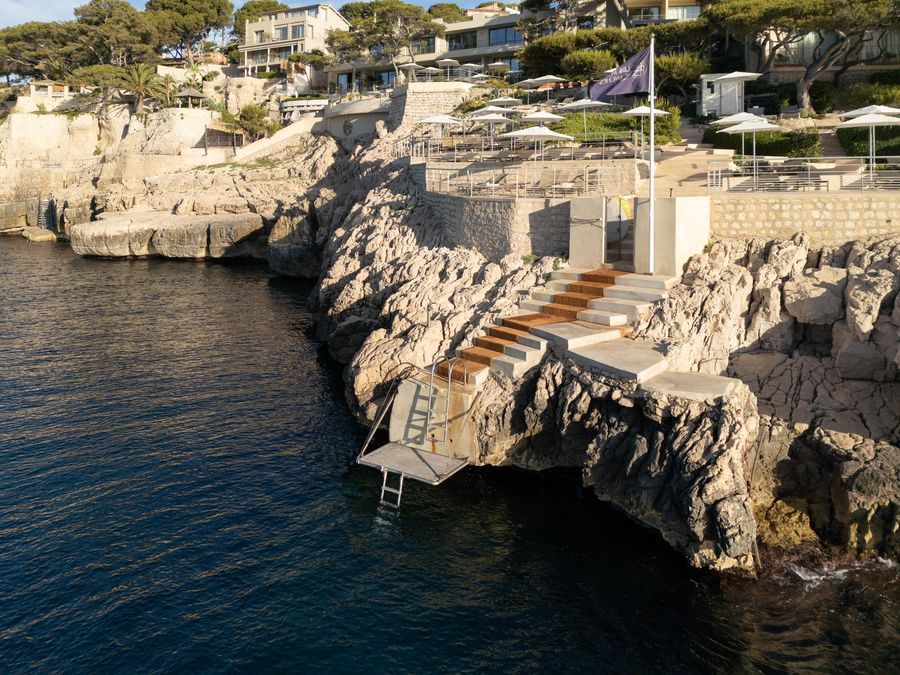
So we ask hotels for the pictures nobody puts in a brochure: the steps down to the water, the ladder off the rocks, the aerial that shows how far the door really is from the sea. Some send us their whole press library and let us choose, which usually produces the best pages. When a hotel sends a photograph of someone actually getting in, that is the one we lead with.
But the most useful photographs often come from swimmers, not from hotels. A swimmer with a phone takes the picture a marketing department never would: the concrete strip where everyone changes in the open, the sunset from the deck above the shore, the water at eye level from twenty metres out. Several listings on the guide are illustrated entirely by the person who recommended them, and those pages are frequently better than the professionally shot ones, because the photographer was looking at the same thing the reader will be.
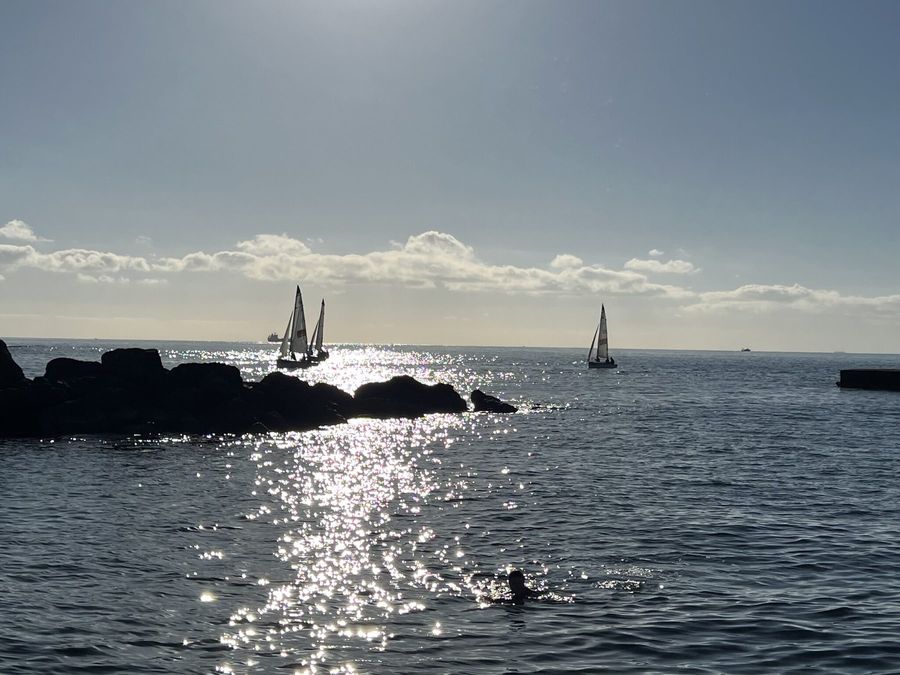
A swimmer decides with their eyes, and they are looking at something different from everyone else.
Send us things
We are always looking for more hotels for open-water swimmers, and three things are always welcome.
A hotel. If you have stayed somewhere and had a real swim from the door, tell us. We would rather hear about one place you have actually swum than ten that look good online.
Photographs of a hotel already on the list. Many of our pages are thinner than we would like. If you have been to one of them and photographed the way into the water, we would like to use it, credited to you.
A correction. If we have something wrong about a hotel you know, say so. Two of our listings were rewritten this year because a swimmer told us we had it backwards.
And if you run a hotel on this list: what we want is not your best photograph, it is your most useful one. The steps down. The ladder. The view from the water back towards the door. If you have a press library, point us at it and we will choose.